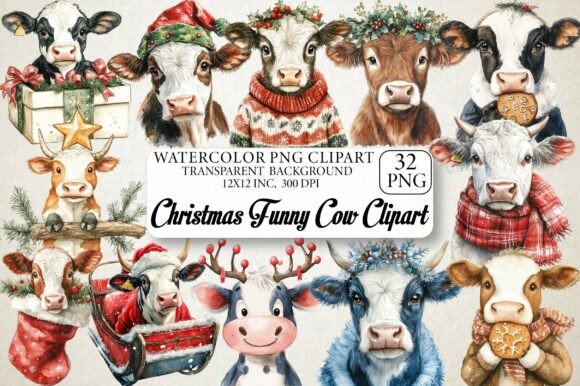
Christmas Funny Cow Clipart Review
As a designer who spends half my life staring at stitch counts and the other half worrying about how a design will hold up after ten wash cycles, I don’t just look for "cute." I look for viability. When Christmas Funny Cow Clipart landed on my desk, my first instinct wasn't to immediately add it to my digital library—it was to ask: does this actually work when digitized? Can it translate from a flat vector into a tactile, textured reality without losing its charm? After running some mental simulations and reviewing the structural integrity of the illustration, here is my practical take on whether this piece deserves a spot in your embroidery workflow.
The First Impression: Mood and Visual Personality
The immediate draw of this illustrations category standout is its inherent whimsy. In a market saturated with traditional reindeer, snowflakes, and stoic Santa figures, a cow brings a distinct narrative shift. It suggests humor, warmth, and approachability. For the Etsy seller or the small shop product owner, this isn't just a graphic; it’s a conversation starter. The visual personality feels relaxed and festive without being overly aggressive or loud. It strikes that delicate balance between holiday cheer and quirky character design that resonates strongly with modern handmade aesthetics.
When you look at the layout, the composition naturally lends itself to central placement. It doesn’t feel cluttered, which is a common pitfall in holiday clipart. This negative space is crucial because it gives the digitizer room to breathe, allowing for proper stitch density adjustments without the design feeling muddy or overcrowded. It feels like a design asset that was built with scalability in mind, capable of shrinking down for a baby bib or expanding for a large tote bag without losing its core identity.
Real-World Application: Where This Design Shines
I always test designs against specific use cases. If I were preparing inventory for the upcoming season, where would Christmas Funny Cow Clipart fit best? My analysis points to a few high-potential categories.
- Custom Apparel and Sweatshirts: This design has a natural home on chunky knit sweaters or cotton-blend sweatshirts. The contrast of a soft, fuzzy fabric against the structured lines of an embroidery file creates a premium feel. It works exceptionally well as a chest-sized logo or a larger back print for those who want to make a statement.
- Baby Embroidery and Nursery Decor: There is something inherently gentle about animals, even funny ones. This clipart translates beautifully to baby embroidery projects like muslin blankets, hooded towels, or nursery wall hangings. Parents are looking for items that are adorable but not generic, and a holiday-themed cow offers a unique twist on traditional nursery themes.
- Tote Bag Design and Everyday Carry: A sturdy canvas tote featuring this machine embroidery design is a staple gift item. The durability of the canvas complements the robust nature of embroidery stitches. It’s a perfect personalized gift for teachers, neighbors, or coworkers during the holidays.
- Kitchen and Home Accents: Think tea towels, aprons, and pillow covers. The domestic setting aligns perfectly with the cozy vibe of the illustration. An embroidered patch style application on a kitchen towel adds a touch of artisanal quality that mass-produced prints simply cannot match.
Critical Considerations for Digitization and Production
While the source image is strong, the magic happens in the conversion. As a reviewer, I have to flag several areas where designers need to exercise caution to ensure the final finished product meets professional standards.
Stitch Density and Detail Management
The success of any animal-based clipart relies heavily on how the fur texture is handled. If the original artwork contains too many fine lines or tiny details, they may get lost in the stitching process. I recommend reviewing the design in a black and white mockup to check contrast. Ensure that the digitizer uses a combination of satin stitch for outlines and fill stitch for the body, perhaps incorporating running stitch sparingly for whiskers or small accents if the resolution allows. Avoid over-complicating the face; sometimes less is more, especially when aiming for a cute, stylized look rather than photorealism.
Fabric and Stabilizer Choices
You must consider the substrate. This design performs best on stable, medium-weight fabrics. If you are attempting this on a stretchy jersey knit or a thin, sheer material, you risk puckering unless you use a heavy-duty cut-away stabilizer. For curved surfaces like caps or hats, the curvature can distort the perspective of the cow’s face, so careful hooping and tension adjustment are non-negotiable. Also, be mindful of dark fabrics; while bold thread colors can pop, ensure there is enough coverage in the fill areas to prevent the underlying fabric color from bleeding through.
Size Constraints
Not every hoop size is created equal. While this design likely scales well, extreme miniaturization can lead to a loss of character. I advise testing the design in your smallest intended hoop size before committing to bulk production. If the eyes or mouth become indistinguishable blobs, it’s time to scale up. Conversely, on very large garments, ensure the stitch count doesn’t become so dense that the garment becomes stiff and uncomfortable to wear.
Commercial Viability and Brand Consistency
For the craft business owner, this clipart offers a strong branding opportunity. It stands out in a crowded marketplace. When customers see a unique, handcrafted element like this, it builds trust and perceived value. It signals that you care about design choices beyond the generic. However, always confirm licensing terms before selling finished items or digital products. Using a design commercially requires clear rights, and assuming ownership is a costly mistake.
This digital embroidery file concept—whether used as a direct stitch file or as a base for applique—adds a layer of professionalism to your offerings. It elevates a simple holiday gift into a keepsake. The emotional connection triggered by a funny, festive cow can drive engagement, encouraging buyers to share their purchases on social media, which serves as free marketing for your small shop product line.
Final Verdict: Is It Worth the Hoop?
In conclusion, Christmas Funny Cow Clipart is a versatile, charming, and commercially viable asset for the serious embroiderer. It bridges the gap between traditional holiday motifs and modern, playful design trends. By paying attention to stitch density, fabric choice, and proper stabilization, you can transform this illustration into a high-quality embroidery project that delights customers.
My advice? Test it thoroughly. Start with scrap fabric, experiment with different thread colors to find the perfect contrast, and inspect the small details under good lighting. If it holds up to these rigorous checks, it’s ready to join your collection of design assets. It’s not just a clipart; it’s a potential bestseller for your holiday embroidery lineup.